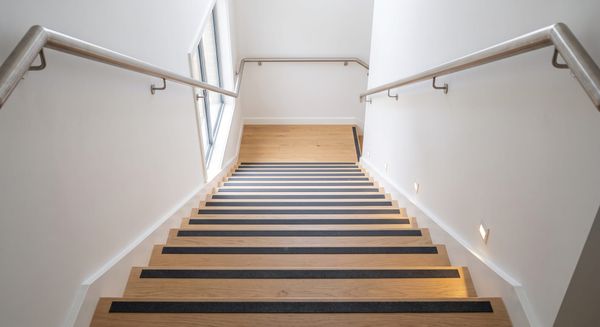
Living With Low Vision: Practical Strategies and Next Steps
What comes after a low vision diagnosis: everyday adaptations, environmental changes, technology, and the rehabilitation professionals who can help.
Reviewed for clarity and usefulness. How we publish
Editorial Independence & Medical Disclaimer: LowVisionGuide.org is an educational resource dedicated to independent living with vision loss. This cornerstone guide contains no commercial product links or affiliate promotions. Information provided is for general educational purposes and does not replace professional eye care, medical diagnosis, or low-vision rehabilitation. Read our full Editorial Independence Charter.
1. Living With Low Vision: What Comes Next
Low vision is vision loss that continues to affect daily activities even after glasses, medical treatment, or surgery have helped as much as they can — but it is not total blindness, and most people retain usable vision. For the full definition, causes, terminology, and statutory-blindness criteria, see our detailed reference guide, Understanding Low Vision.
This guide focuses on what comes next: the everyday adaptations, environmental changes, technology, and professional support that help you keep doing the things that matter to you.
2. How Vision Loss Varies: Common Conditions & Functional Patterns
Eye conditions affect vision in distinctly different ways. Understanding the specific pattern of vision loss helps determine which daily living strategies and adaptive tools will be most effective.
- Central Vision Loss (e.g., Age-Related Macular Degeneration): Macular degeneration damages the macula—the small central area of the retina responsible for sharp, detailed straight-ahead vision. Individuals may experience blurred, distorted, or missing central vision, making it difficult to read print, recognize faces, or see fine details, while peripheral (side) vision remains intact.
- Peripheral Visual Field Loss (e.g., Glaucoma): Glaucoma damages the optic nerve, often causing a gradual constriction of peripheral vision. As side vision diminishes, navigating doorways, detecting steps, and moving safely through crowded or unfamiliar spaces becomes challenging, even if central visual acuity remains sharp.
- Patchy or Fluctuating Vision Loss (e.g., Diabetic Retinopathy): Damage to retinal blood vessels can cause floating spots, hazy patches, or variable vision loss across different areas of the visual field. Blood sugar fluctuations can also cause day-to-day changes in visual clarity.
- Reduced Contrast & Hazy Vision (e.g., Cataracts or Corneal Conditions): Clouding of the eye’s crystalline lens or cornea causes overall hazy vision, faded color perception, and heightened glare sensitivity, especially around bright lights or windows. While cataracts are often treatable with surgery, they may contribute to persistent low vision when surgery is not clinically appropriate or when underlying retinal disease coexists.
- Inherited Retinal & Optic Nerve Disorders (e.g., Stargardt Disease, Retinitis Pigmentosa): Genetic conditions can affect central vision, peripheral field, or night vision in children and younger adults, requiring early adaptation strategies.
3. Core Principles of Adaptive Problem-Solving
Adapting to vision loss does not mean giving up valued activities; it means changing the way tasks are approached. Rehabilitation professionals advocate a task-first philosophy:
Start with the task, not the gadget. Before looking for a device, evaluate the specific activity, the environment where it takes place, and the visual demands required.
Everyday independence relies on a combination of six practical adaptation strategies:
- Optimizing Task Lighting: Directing glare-free, focused light onto work surfaces.
- Enhancing Contrast: Placing light objects against dark backgrounds (and dark against light).
- Using Appropriate Magnification: Enlarging print or details through optical or digital aids.
- Leveraging Technology: Using smartphone accessibility, audio readers, and screen magnification.
- Establishing Spatial Organization: Creating consistent, predictable layouts for tools and supplies.
- Learning Non-Visual Techniques: Developing tactile and auditory skills through professional training.
4. Lighting & Glare Control: The Foundation of Visibility
Appropriate task lighting can make print and physical objects significantly easier to see for many people living with low vision. Relying solely on general ambient ceiling lights often creates shadows and unneeded room glare.
An effective lighting setup incorporates direct, adjustable illumination aimed directly onto the task surface—positioned so the light source shines on the material rather than into the user's eyes. Because glare tolerance varies widely among eye conditions, controlling reflections from glossy countertops, shiny paper, and bare bulbs is just as important as increasing brightness.
5. Contrast Enhancement in Daily Life
When contrast sensitivity declines, objects with similar light reflection blend into one another. Enhancing visual boundaries through high contrast is one of the most immediate, cost-effective ways to improve daily safety and speed:
- Kitchen Prep: Slice dark vegetables (broccoli, steak) on a bright white cutting board, and light foods (onions, potatoes) on a solid black board.
- Tableware: Use solid-colored dinnerware that contrasts with the placemat and food (e.g., a dark blue plate on a light tablecloth).
- Household Marking: Place high-contrast switch plates against light walls, or mark key appliance dials using bright, tactile bump dots.
- Writing & Reading: Write with bold, dark felt-tip markers on bright white paper rather than fine ballpoint pens or pencils.
To explore room-by-room contrast setups, read our educational guide: Kitchen Accessibility for Low Vision: Contrast, Tactile Markers & Safer Food Preparation.
6. Magnification: Choosing Form Factor & Power
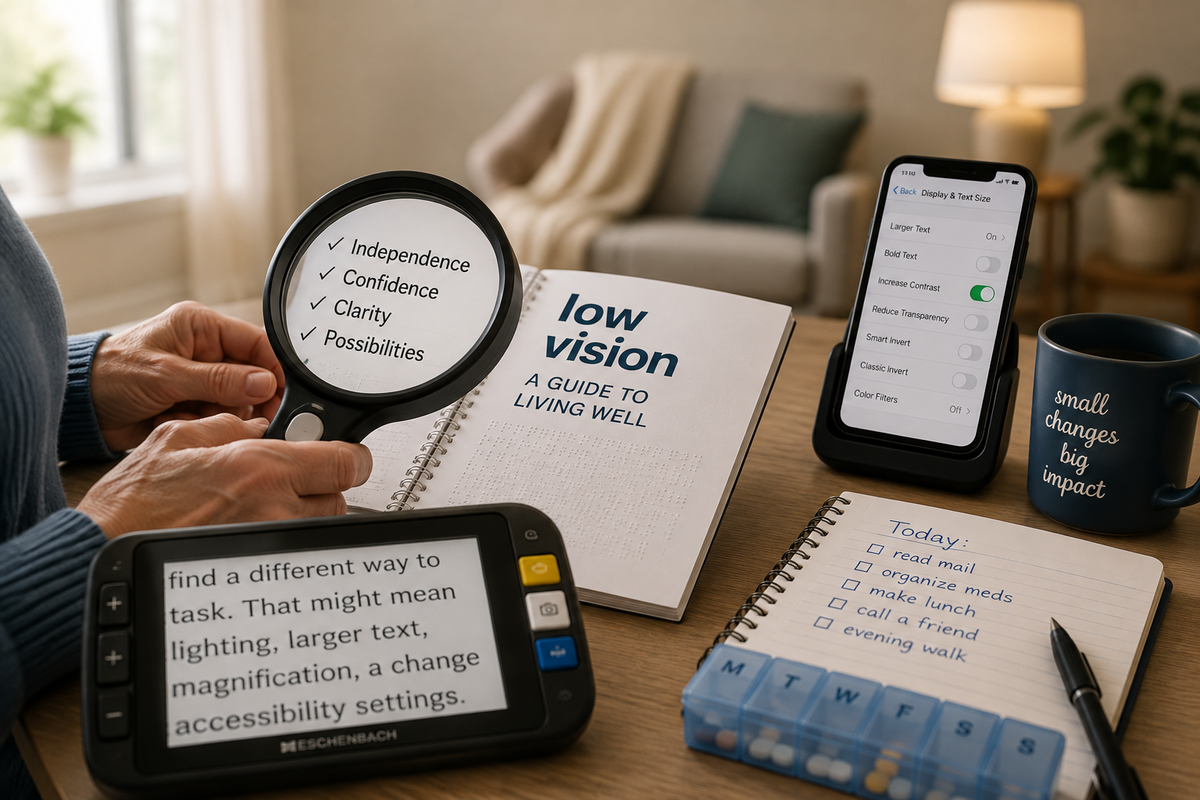
When environmental lighting and contrast adjustments are not enough, magnification enlarges text and physical objects. Magnification tools fall into two main categories: optical lenses (handheld, stand, and dome magnifiers) and electronic video magnifiers (digital CCTVs).
A common misconception is that the strongest magnifier is automatically the best choice. In practice, higher magnification power reduces the field of view (the number of words visible at once) and shortens the physical working distance.
To select the right tool for your specific visual tasks, explore our dedicated educational guides:
- Magnifier Types Explained: Power, Working Distance, and Field of View — Evaluating handheld, stand, dome, and electronic designs for specific activities.
- What Magnification Strength Do I Need? A Guide to Magnifier Power & Diopters — Understanding diopters, working distance trade-offs, and lens power.
7. Digital Accessibility & Mobile Tools
Modern mobile operating systems include powerful built-in accessibility features designed for vision loss. Depending on the specific smartphone or tablet model and operating system, built-in features may include:
- Screen magnification and dynamic text resizing.
- High-contrast display modes and color inversion.
- Integrated screen readers that announce on-screen text aloud.
- Camera-based digital magnification and light controls.
- Optical character recognition (OCR) apps that read printed documents, signs, and mail aloud.
For a complete tutorial on configuring mobile devices, visit our guide: Smartphone Accessibility & Vision Tools.
8. The Role of Low-Vision Rehabilitation Services
Adapting to vision loss does not have to be done alone. Low-vision rehabilitation provides clinical evaluations, specialized instruction, and environmental adaptation strategies tailored to individual goals.
According to guidelines from the American Academy of Ophthalmology (AAO) and APH ConnectCenter's VisionAware program, a low-vision rehabilitation team may include:
- Low-Vision Optometrists & Ophthalmologists: Eye care specialists who perform comprehensive functional vision exams, prescribe specialized optics, and evaluate optical aids.
- Occupational Therapists (OTs) & Certified Low-Vision Therapists (CLVT): Specialists who provide hands-on training in daily living tasks, home safety, lighting setups, and adaptive equipment in the home environment.
- Certified Vision Rehabilitation Therapists (CVRT): Professionals who teach independent daily living skills, adaptive communication, braille, and household management.
- Orientation & Mobility (O&M) Specialists: Instructors who teach safe travel techniques, white cane navigation, spatial orientation, and public transportation skills.
When to Ask for Services: If vision changes are making everyday activities difficult, you can ask your eye-care provider about a referral for low-vision rehabilitation services.
9. Assembling a Low-Vision Toolkit
Most individuals who function successfully with low vision do not rely on a single device. Instead, they build a flexible toolkit matched to different activities throughout the day:
- A compact pocket or handheld magnifier for spot-reading price tags and menus away from home.
- An adjustable gooseneck LED task lamp positioned next to a primary reading chair.
- Self-adhesive tactile bump dots applied to essential oven, microwave, and washer controls.
- High-contrast cutting boards and non-slip mats in the kitchen.
- Configured accessibility settings or OCR scanning apps on a smartphone.
- A stable stand magnifier, dome magnifier, or desktop video magnifier for continuous book or mail reading.
10. Where to Start: Practical Next Steps
- Schedule a Comprehensive Eye Exam: Ensure your underlying ocular health is monitored and all treatable vision changes are evaluated by an eye care professional.
- Identify Your Priority Tasks: Make a list of 2 or 3 daily activities that have become difficult or frustrating.
- Improve Environmental Lighting & Contrast: Start with zero-cost or low-cost adjustments—reposition lamps, reduce screen glare, and pair light and dark items.
- Explore Educational Guides: Learn how specific tools and adaptive strategies apply to your priority tasks before purchasing equipment.
- Request a Low-Vision Rehabilitation Referral: Work with a qualified low-vision specialist or occupational therapist for personalized evaluation and skill training.
Sources
- American Academy of Ophthalmology — Vision Rehabilitation and Low-Vision Care
- APH ConnectCenter (VisionAware) — Understanding Vision Rehabilitation
For the definitional and clinical sources behind what low vision is, see Understanding Low Vision.
Medical & Educational Disclaimer
This guide is provided strictly for general educational purposes and does not provide medical diagnosis, treatment recommendations, or clinical advice. LowVisionGuide.org is an independent educational publisher. Always consult a qualified eye care professional, low-vision optometrist, or medical specialist regarding specific eye conditions, sudden visual changes, or individual medical treatment plans.